Book Review | At Last by Marisa Silver
If you’re thinking about checking out At Last yourself, don’t worry about spoilers. The first part of my reviews are always spoiler-free so you can see if the book is your cup of tea. After a quick summary and a basic review, I’ll give a spoiler warning and do a deep dive into everything I loved and hated about At Last.
Although Marisa Silver is the author of several other books, this is my first read from her.

Book Cover: At Last by Marisa Silvers
Content Warning
I always like to give a quick content warning for any sensitive topics. These are some content warnings for At Last:
Ableism.
Alcohol or drugs.
Antisemitism.
Death.
Dementia.
Divorce.
Eating disorders.
Mental illness.
Pregnancy.
Quick Synopsis
At Last is a winding and complex story that follows two families coming together, specifically through the relationship of and interactions between the two grandmothers. The story starts with their children marrying, and leads us through the years that follow as the family changes and the grandmothers approach their lives, grandchild, and purposes very differently from one another.
This is the kind of story that is family-focused, but manages to touch on so many other topics—sexism, parenting, mental illness, marriage. This one is slow-paced, and almost languid. You’ll get lost in the backstories of the women and forget who they were at the start of the story, which helps to give time a loose sense.
My Rating
Everybody has to come up with their own system for judging and rating books, and here’s mine:
One star: I couldn’t finish the book. (DNF)
Two stars: I struggled to finish, but I did.
Three stars: This book was okay and worth reading.
Four stars: I liked this book and I would recommend it to a friend.
Five stars: I’d read this book again, and it’s going on my favorites shelf.

My Rating Scale
By no means do I think this is a perfect rating system, but I had to come up with something that would help me avoid arbitrarily assigning ratings. This provides a solid guideline for rating qualifications.
I gave At Last an four-star rating because I really enjoyed it and would recommend it to a friend, but I wouldn’t read it again.
My Recommendations
If you enjoyed At Last and you’re looking for more books to read next, here are some of my suggestions:
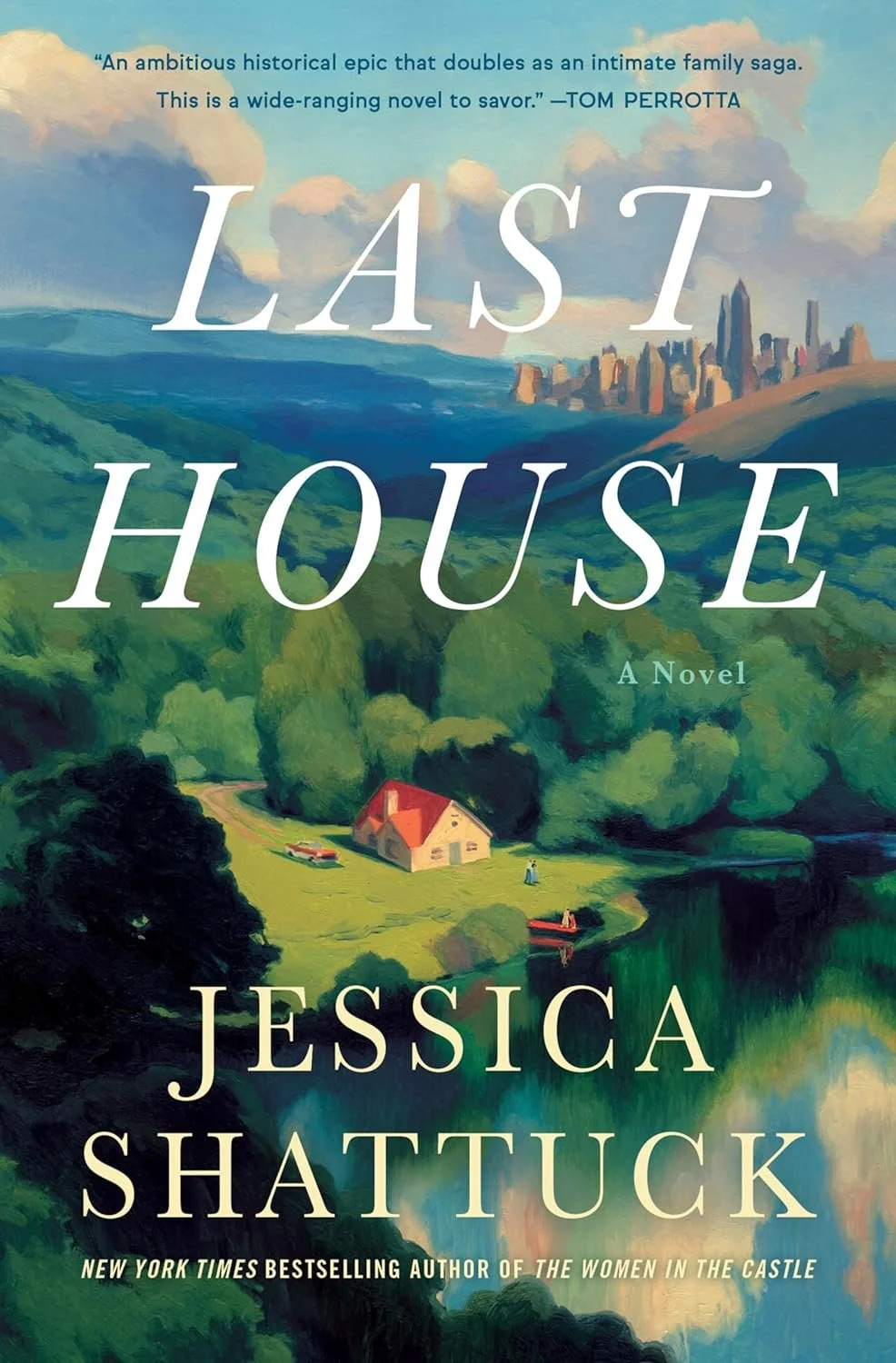
Book Cover: Last House by Jessica Shattuck
Last House by Jessica Shattuck
Like At Last, Last House tells the story of a family through generations, and leaves us with the oldest women in a room with the youngest of them. It explores the idea of doomsday and belief and character interact with obligation of being family.
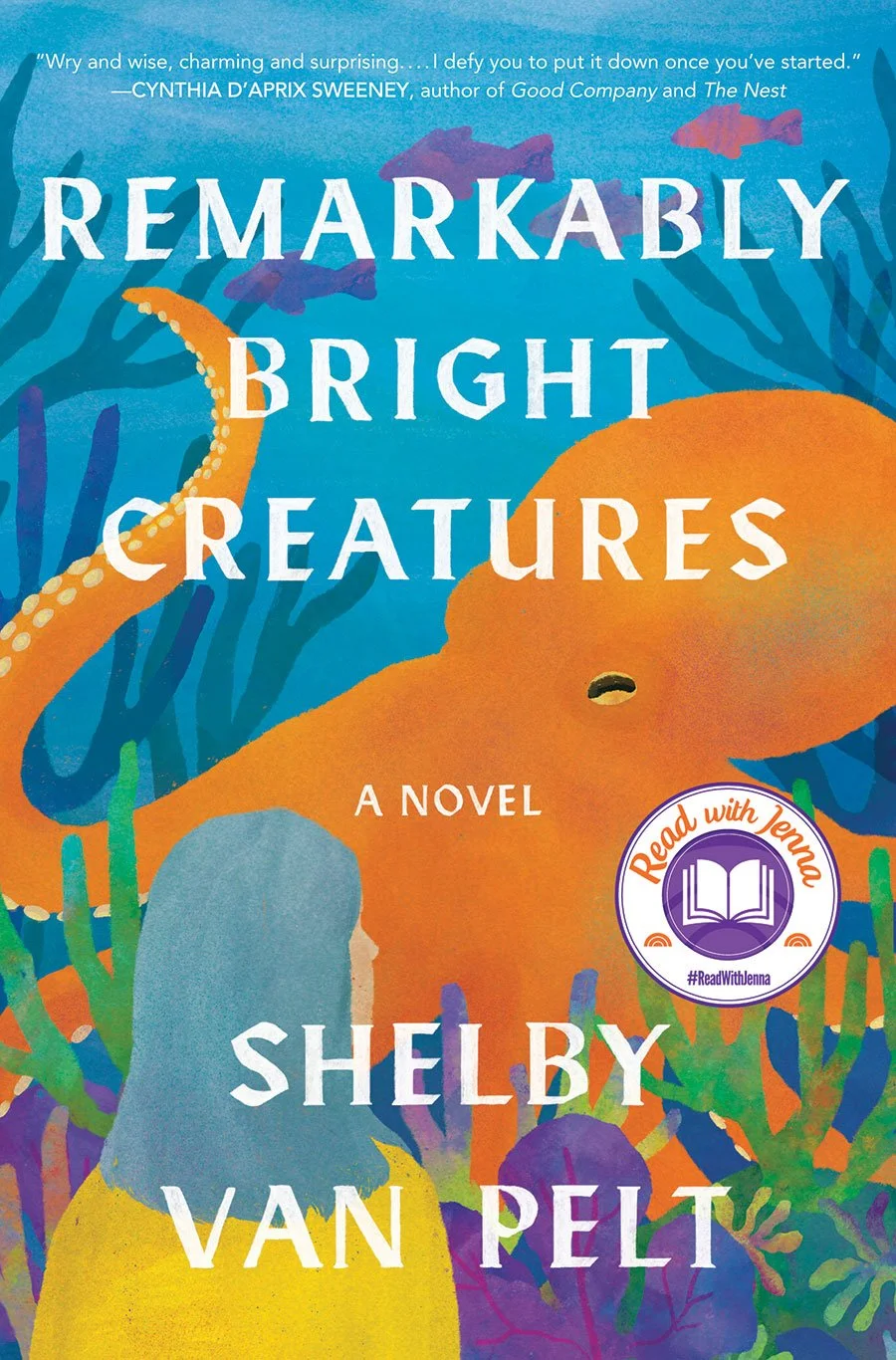
Book Cover: Remarkably Bright Creatures by Shelby Van Pelt
Remarkably Bright Creatures by Shelby Van Pelt
This is another family-centered book, but this one centers around an intelligent Octopus in a local aquarium. I found this one to be heart-warming, just like At Last could be in some moments. In this one, the octopus is a bit more like the matriarchs in At Last.

Book Cover: Pineapple Street by Jenny Jackson
Pineapple Street by Jenny Jackson
Another story about family disfunction, this one follows three rich woman in Brooklyn. They grapple with love, family, and class, exploring what they want in life and how to best move through the world. In this one, money plays a big role, highlighting the differences between our main characters.
Summary
We’re now entering the spoiler-y part of this review. If you think At Last sounds like your cup of tea, click away, read it, and come back to see if you agree or disagree with my critique. If you like the sound of the book but you don’t want to read it, don’t worry, I’ll give you the full rundown.
SPOILERS
-
SPOILERS -
At Last opens with the wedding between Ruth and Tom, during which Helene and Evelyn (their mothers) are running errands together. They’re incredibly different, and we see that highlighted in their behavior and how they dress—Evelyn more practically, Helene obviously with some money. Evelyn smokes, and drives a bit recklessly, and Helene supposes that might be why Ruth—her future daughter-in-law—is like a hippie.
At this point in the story, both of them are widows. Helene’s husband was crushed by a tree in his driveway, while Evelyn’s fought an illness for a while before passing.
Evelyn grew up on a struggling farm, and when she was a teenager, her mother took both her children off that farm and into the city for a better life. Evelyn's father stayed behind and sold off bits of the land until almost nothing remained.
In the city, Evelyn created a fake job working as an assistant to a rich woman to pass her weekends. For money, she did homework for other kids at school. While spending Saturdays outside of the house, she runs into a man in a hotel and he coerces her into sleeping with him. She’s sixteen, and when the man finds out she’s a virgin—and not a sex worker—he kicks her out.
Helene grew up as an only child because her two siblings died—one of sepsis, and the other from falling off a roof. People assumed she would live with and care for her parents, but then a local doctor called to propose to her, and she married a man ten years older. They had Tom together.
Then, when Helene’s doctor husband died, she found letters in his office, but they were all in German. Helene hired Ruth to translate them for her, and that’s how Ruth met Tom. Helene has to grapple with the reality of these letters—they are from a Jewish woman in Germany, asking Emil for money and a way to make it to America. It’s clear from the letters that she has a child, too—this is likely Emil’s first family.
Ruth and Tom have a daughter named Francie, and Evelyn, Ruth’s mother, moves to Cleveland to be nearer to them. The grandmothers both spend time with Francie, and there’s an undercurrent of competition between them.
Francie is a nervous kid, and Evelyn struggles with how to spend their time together. When Helene takes Francie to go ice skating and she gets hurt, Evelyn comes to meet them at the hospital. We see Helene is concerned about Francie’s love for her, and doesn’t like the feeling that Francie might like her other grandmother more.
Later, once Francie is older, Evelyn struggles with her love life. There’s a man who’s obviously interested in her, but she pushes him away, afraid of commitment. Then Ruth, Tom, and Francie decide to move to New York City, and Evelyn says yes to her man. She’s left in Cleveland with him.
Meanwhile, Evelyn takes a personal development class. It’s clear that she struggles with having a purpose in the world, especially with her son and grandchild so far away. At the class, she makes up a lie about liking a composer, and makes an unlikely friend in a man and his disabled son. Together, the three of them go to the symphony.
As a teenager in New York, Francie is dealing with her OCD and her parents’ divorce. Tom and Ruth separate, and Francie has to navigate the strain of that while her mental health gets worse. While in college, she suffers more and takes a break from classes, arriving on her grandma Helene’s doorstep.
Francie spends time with her grandmother, who brings her along to a Shivah at the temple. The two of them sit together and pray, then Helene sends Francie back to school. Things only continue to get worse, with Francie taking pills to cope. Ruth and Tom have to come get her, bring her home while she gets treatment for her OCD.
Evelyn moves to Florida and has broken up with her man. There’s a little boy who lives in the same building as her who comes to help with the cleaning sometimes, and she notices that he’s stealing little things from her, like Kleenexes and travel-sized shampoos. When she goes to confront the boy’s mother, and he gives back the stuff that he’s been taking, it’s an awkward encounter.
As time continues to march on, Helen’s memory gets worse, and Tom takes her to a doctor, finding out that she has dementia. It progresses with her getting out and getting lost trying to go to her normal salon appointment. Francie comes to visit her grandmother, and they spend time together.
When Francie finds Dr. Emil’s letters, she and Tom talk about what they could mean. Whether Emil abandoned his wife and child, or might have been trying to help a woman find safety.
As Helene’s dementia progresses, Evelyn comes to visit her in the hospital. She thinks about her relationship with Helene, and all the small pieces of the woman she’d learned. Like how Helene had never worn a bathing suit, and how she traveled with the American flag in her suitcase.
The last part of the story—told after Helene’s death—is from Francie’s point of view. We see her and her partner, Jenny, preparing to have a baby. Evelyn is there with them, and she’s sick with lung cancer.
We end with Francie thinking about her life in relation to her mother and grandmother, and with the child she’s expecting. People's lives can be so rich, but conversations throughout the years only communicate so much.
Deep Dive
Alright, now that you know what happens in At Last, let’s get down to my thoughts on the book.
At Last is an exploration of womanhood and motherhood, and how the two interact with one another. Through Evelyn and Helene, we see two different approaches to those things, and then through Ruth and Francie, we see even more deviation from the original design.
This book feels like several nesting eggs of ideas—we see not only how motherhood intersects with womanhood, but also how both of those things affect our characters, and intersect with the other facets of their lives.
For example, Ruth’s interactions with her mother during her wedding are tense, and show their relationship. Both Evelyn and Helene are more withdrawn from their children than Ruth and Tom are with Francie.
Several of the characters in this book blame Ruth for Francie’s mental health struggles. This opens up a question for us, as readers—is it possible for a mother to really affect her child that much? And, additionally, why do none of the characters blame Tom, even though he’s the one who cheats on Ruth and causes the divorce?
When held up to one another, Helene and Evelyn seem very different. But when we back up, and see more of the reality of their lives, they are more alike than they think.
Let’s touch on the issues of the letters. Ruth comes to Helene’s house to translate these letters for her, and they reveal—most likely—that Emil had another family he left behind in Germany when fleeing to the United States.
We get some form of closure for this—Tom and Francie finding the letters in the attic and briefly discussing them. When reading through some other reviews on this book, I noticed some readers were hoping for more information about the letters, or felt that this string in the story had been abandoned.
My personal thought on this is that the book’s closure for the letters mimics what these characters might receive if they were real—Francie hears from her father, who heard it from his wife, who translated the letters years ago. Within the family dynamics as we see them in the book, this kind of communication around history seems exactly right. It shows us what would have happened in real life.
When Francie is living in New York City with her parents, there’s a window seat that she loves to sit at. We learn that a bird once hit that window, and the Francie wasn’t able to clean it off, so she had to sit with the remains until the scheduled window cleaning.
Later, while her parents are separating, and Tom is moving out of the apartment, other things continue to hit her window, and she assumes they’re birds. Later, Francie is sleeping when she hears something hit the window again, and this time, she finds a pellet on the floor of her room. A boy has been shooting at her window with a BB gun.
Francie calls out for her mom and dad—though her dad isn’t there—and her mom asks why Francie didn’t say anything, that it’s her parents’ job to make sure she’s safe.
I really enjoyed this portion of the book. The moment when Francie cries out for her dad, even though he’s not there any more. The parallels between Francie being shot at (being in danger) and not asking for help (just like she doesn’t later, when she’s in college.)
This book is told from third-person limited (or maybe slightly omniscient), though the perspective changes with each section we read. At first, we’re mostly reading about Evelyn and Helene, but as they get older, we see more from others, including Tom and Francie. I enjoyed this structure to the book, and felt that the little pieces came together nicely to make a larger whole.
All in all, I enjoyed At Last, and if you like stories about families and from many perspectives, you might like this one too.
